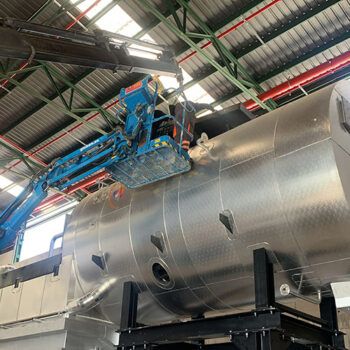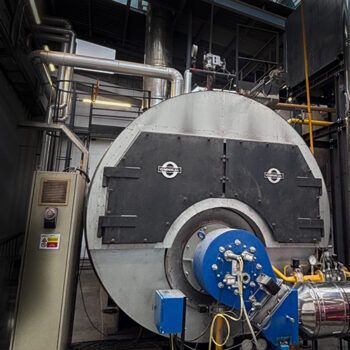



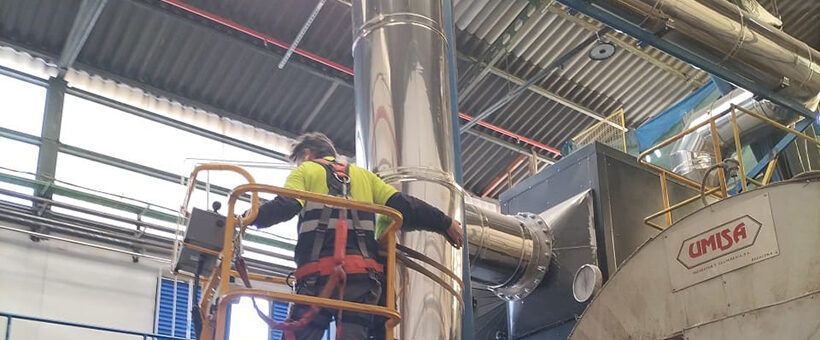
Commissioning of a preheater in a paper mill in Madrid
Soluciones Integrales de Combustión is carrying out the commissioning of a preheater in a paper mill in the town of Madrid, within the strategic plan of the company to improve the energy and environmental efficiency.
The paper industry is among the most energy-intensive sectors, consuming large quantities of energy, along with others such as steel, metallurgy, chemicals, cement, and glass. These sectors, mostly part of basic industry, depend on energy (electricity, gas, etc.) as a primary production factor, meaning that energy costs can represent a significant percentage of total production costs.
Combustion air preheaters (APH) are one of the technologies used to improve the efficiency of boiler and furnace installations, due to their ability to optimize the performance of the thermal system.

How do SICAPH preheaters work?
SICAPH preheaters, designed by Soluciones Integrales de Combustión allow heat transfer from the outgoing combustion gases to the fresh air, which then re-enters the burner or combustion chamber.
Commissioning of a preheater in a paper mill allows fresh air to circulate inside the tubes while the exhaust gases circulate through the flue gas chamber. The fresh air intake tubes are finned, which increases the turbulence of the exhaust gases and the heat exchange surface area of the unit. These finned fresh air tubes are configured in a line and in compact blocks to achieve a high heat transfer coefficient and a drastic reduction in exhaust gas temperature. Soluciones Integrales de Combustión constructs the gas casing from premium-quality carbon steel sheet, properly reinforced and arranged to prevent leaks.
Among its main features are the following:
– Reduction of pollutant emissions
– Reduction of chimney outlet temperature, thus preserving the environment and animal welfare
– Fuel savings
– Easy maintenance
– They do not affect the operation of boilers and furnaces
Ecological improvement of facilities with preheaters
SICAPH preheaters can be adapted to any type of installation, according to the customer’s needs. They are designed to operate with all types of fuels, from diesel or gas oil to biomass, wood, coal, natural gas, biogas, or hydrogen.
Many of these units, at the customer’s request, are equipped with an automatic cleaning system, thermal insulation, and instrumentation, which reduces energy losses. The system can be further enhanced with the installation of a Flue Gas Recirculation (FGR) system to achieve even greater NOx emission reductions and become an environmentally friendly installation.
- On 10/11/2025